
How to Build an Effective Study Plan for Class 6
By The Sophoz Curriculum Team
The goal is not more worksheets. It is stronger understanding, better decisions and more independent problem solving.
A study plan should solve a learning problem
A timetable is not automatically a study plan. A grid filled with subjects can look organised while doing little to improve learning. A useful Class 6 plan begins with a question: what does this learner need to become able to do over the next eight to twelve weeks?
For Olympiad preparation, the answer usually includes secure foundations, greater comfort with unfamiliar problems, better error awareness and eventually better pacing. The plan should allocate time to those outcomes rather than simply assigning pages.
Week 0: run a small diagnostic
Before the first week, use a mixed set to sample number sense, arithmetic, fractions and decimals, geometry, measurement, data interpretation and reasoning relevant to the target exam. Keep it short enough that fatigue does not distort the result.
Create three buckets: secure, developing and needs review. Then note error causes. A child who understands fractions but misreads word problems needs a different plan from one who has a genuine fraction concept gap.
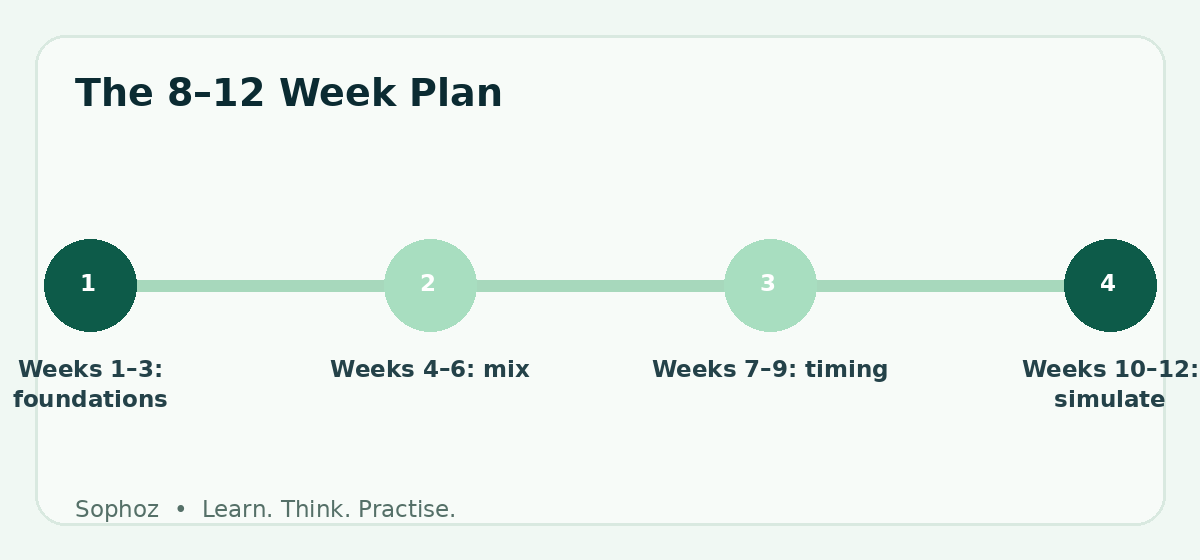
Weeks 1–3: strengthen foundations
Use the first phase to repair weak concepts and establish a predictable routine. Each session can begin with five minutes of retrieval from earlier learning, followed by a concise explanation or worked example and a small set of carefully chosen questions.
End with one question that looks different from the example. This is important: it forces the learner to transfer the idea instead of copying the surface form.
Weeks 4–6: mix topics and raise novelty
Once individual topics are reasonably secure, mix them. In a mixed set, the chapter title no longer tells the learner which method to use. That extra decision is exactly what many competitive questions require.
Add multi-step word problems, patterns, logical reasoning and questions containing unnecessary information. Continue revisiting older topics so that earlier learning remains available.
Weeks 7–9: add exam decisions
Introduce timed mini-sections rather than jumping straight to full papers. Teach the learner to scan, solve high-confidence questions, mark uncertain items and return. Discuss when estimation can eliminate impossible answers and when written working is safer than mental calculation.
Timing should expose decision-making, not create panic. If accuracy collapses, reduce the time pressure and rebuild.
Weeks 10–12: simulate, review and taper
Use complete or near-complete mock papers under realistic conditions. The review afterward is the most valuable part. Sort mistakes into knowledge, interpretation, strategy, calculation and pacing.
In the final days, reduce volume. Revisit the error log and representative questions. Avoid turning the last week into a desperate attempt to learn everything.
A sustainable weekly template
A simple four-session structure works well for many learners. Session one: concept plus worked examples. Session two: mixed problem solving. Session three: retrieval and error correction. Session four: timed mini-test, puzzle set or mock-paper section.
Keep at least one or two days free from Olympiad work. Children still need school time, play, sleep and unstructured recovery. A plan that cannot be sustained is not an effective plan.
How to measure progress
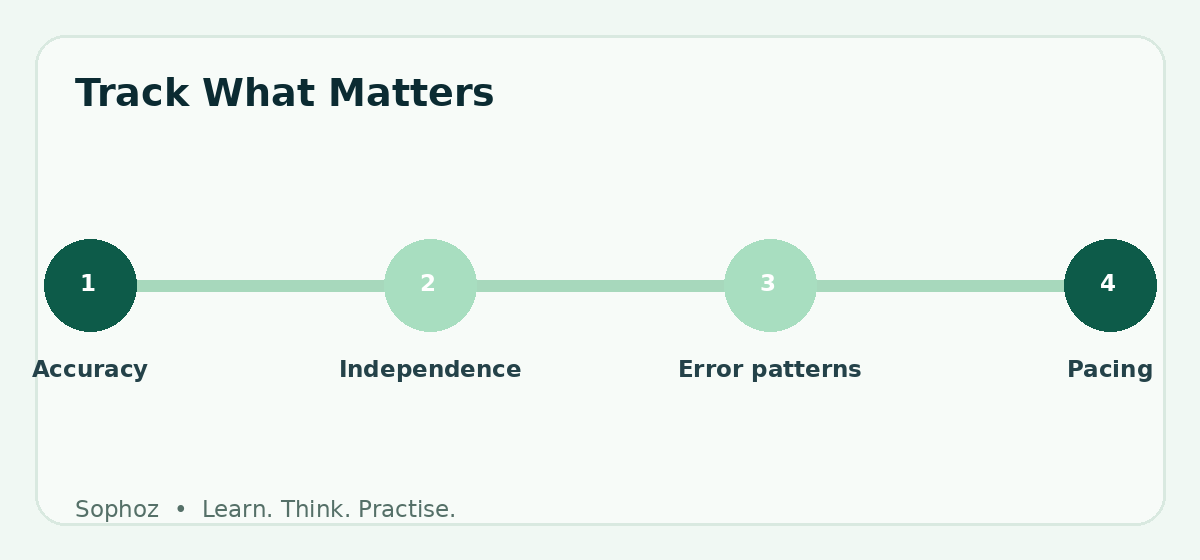
Track accuracy by topic, number of questions solved without hints, recurring error types, ability to explain solutions and pacing on familiar question types. These measures are more diagnostic than pages completed.
Every two weeks, adjust the plan. Move time away from areas that have become secure and toward persistent weaknesses. A timetable should respond to evidence.
What to do when a week goes wrong
School events, illness and family schedules will interrupt plans. Do not 'repay' missed sessions by doubling the next week. Identify the most important unfinished objective and continue from there.
Consistency over months comes from being able to restart without guilt. This is also a useful learning habit for children: plans are tools, not moral tests.
Sample 40-minute session
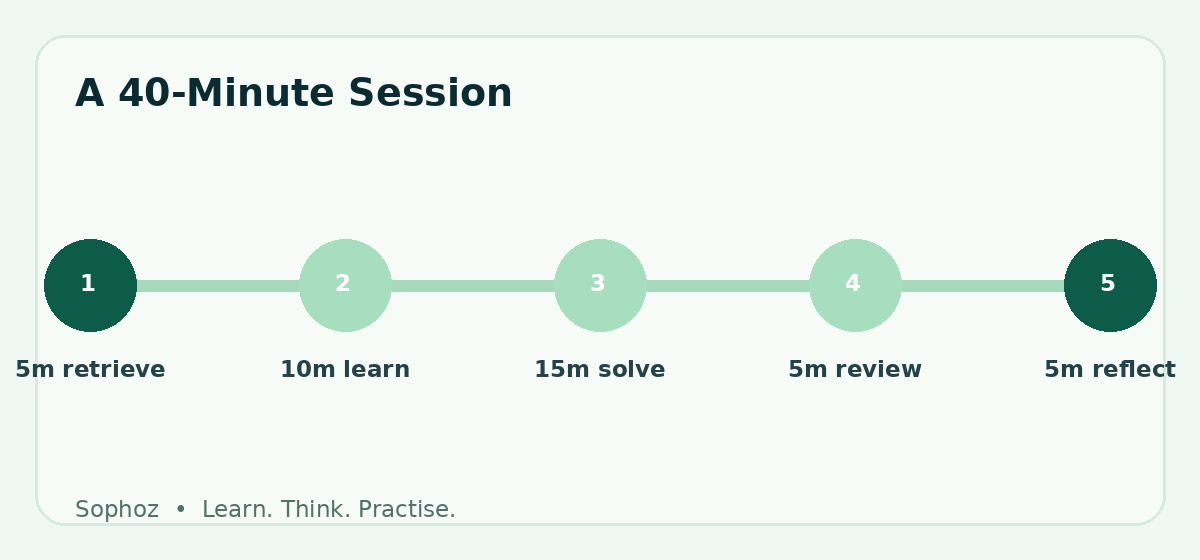
Begin with five minutes of retrieval: three short questions from previous topics. Spend ten minutes on a concept or worked example. Use fifteen minutes for three to five varied problems. Spend five minutes discussing one mistake or alternative method. Finish with a five-minute reflection: what felt easy, what felt difficult and what should return next time.
The structure is deliberately simple. The quality of the questions and feedback matters more than elaborate scheduling.
A practical way to use this guidance at home
Choose one small change rather than rebuilding the entire routine in a day. For example, introduce a five-minute retrieval warm-up, begin an error log, or replace one chapter-labelled worksheet with a mixed set. Use the change consistently for two weeks and observe what happens.
Parents should look for behavioural evidence as well as scores. Does the learner begin work with less prompting? Do they explain ideas more clearly? Are the same mistakes recurring less often? Can they identify what they find difficult? These indicators help distinguish productive practice from mere activity.
Keep the environment simple. A clear desk, the required materials, a visible timer when timing is appropriate and a defined end point can reduce negotiation. Finish while the learner still has some energy rather than extending every session until attention disappears.
Questions parents can ask after practice
Useful questions keep the focus on learning: Which question required the most thinking? What clue helped you? Where did your first approach fail? Which mistake would you recognise faster next time? Can you explain one solution without looking at your notes?
Avoid turning reflection into interrogation. One or two questions are enough. The aim is to help the child notice their own thinking so that strategies gradually become self-directed.
Over time, invite the learner to choose part of the next session. They might select a weak topic to revisit or a problem they want to retry. Small choices can increase ownership without removing structure.
What success should mean
A competition naturally produces scores and ranks, but preparation can be judged more broadly. A successful learner becomes more accurate, more strategic and more willing to engage with unfamiliar material. They recover from errors faster and need fewer external prompts.
Those capabilities are valuable even when a particular paper is unusually difficult. They also reduce the temptation to treat one result as a permanent label.
Use the exam as a checkpoint. After it, discuss what worked, what the learner would change and which kinds of problems they would still enjoy exploring. That turns a one-day event into useful information for future learning.
A final note for families
Preparation works best when it remains proportionate to the child's age and wider life. The purpose of structured practice is to make thinking clearer, not to fill every free hour. Keep expectations explicit, feedback specific and the routine predictable.
When a learner struggles, diagnose before increasing pressure. When a learner succeeds, ask what strategy contributed. In both cases, direct attention toward processes that can be repeated. That is how an exam-specific routine can contribute to a more general ability to learn independently.
Revisit the plan regularly. What was appropriate four weeks ago may no longer be the best use of time today. Strong learning plans are responsive: they preserve what is working, remove what is not and keep the next challenge within reach.
Sources and further reading
- SOF IMO Class 6 syllabus and pattern
- SOF IMO 2026–27 overview
- SOF Class 6 IMO preparation guide
- SOF Class 6 Science syllabus
- Education Endowment Foundation: cognitive science in practice
Exam details can change. Always verify the current syllabus, dates and pattern with the official organiser.