
How Much Time Should a Child Spend on Olympiad Preparation?
By The Sophoz Curriculum Team
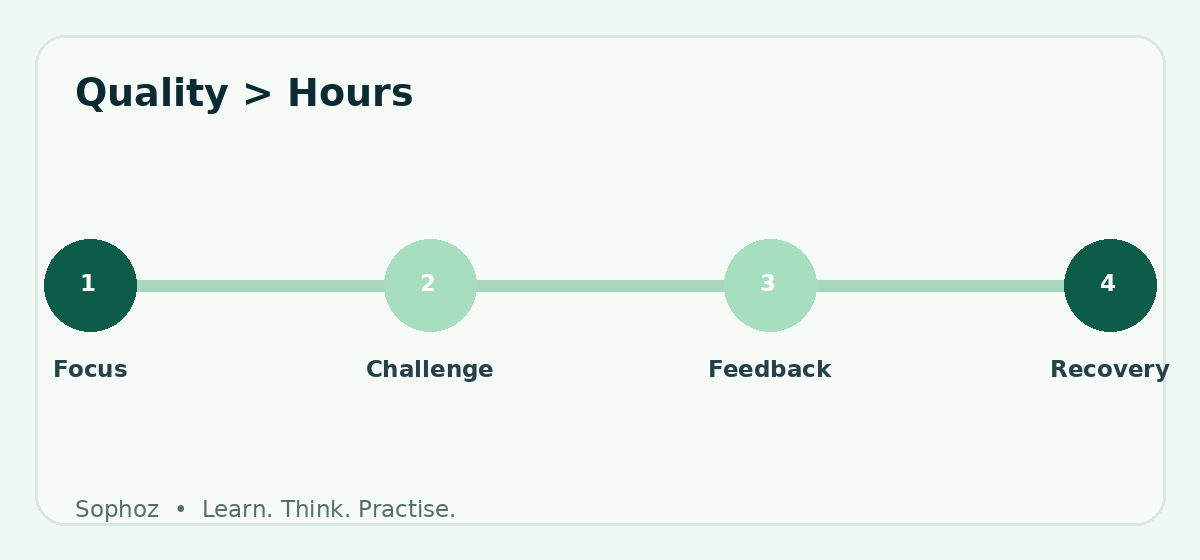
The goal is not more worksheets. It is stronger understanding, better decisions and more independent problem solving.
Start with the learner, not another child's timetable
There is no universally correct number of Olympiad study hours. A learner with secure foundations and prior competition experience has different needs from a learner encountering non-routine questions for the first time.
The right workload is enough to create repeated, thoughtful contact with the material while leaving room for school, sleep, play and other interests.
A practical starting point for Class 6
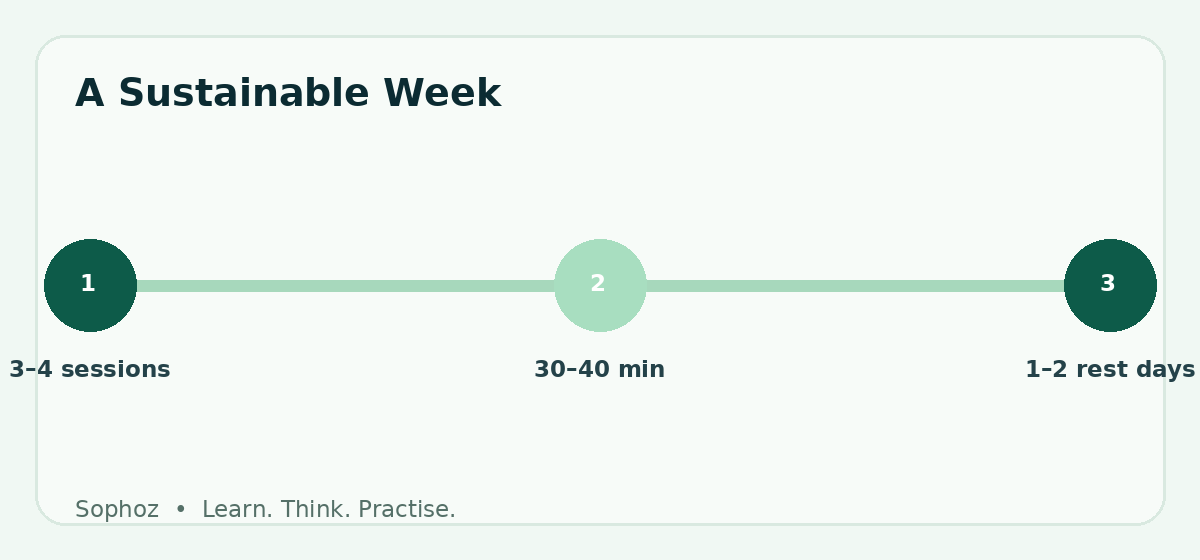
For many Class 6 learners, three or four focused sessions of roughly 30–40 minutes per week can be a sensible starting structure during an eight-to-twelve-week preparation window.
This is not a rule. A child with a specific foundation gap may need additional school-level work. A highly experienced learner who actively enjoys advanced problems may choose more. The important variable is productive attention.
Why longer is not automatically better
After attention declines, extra minutes can add very little learning. Tired learners reread, guess and repeat mistakes. A shorter session with a clear objective, varied questions and feedback can be more effective.
Measure what changes because of the session, not how long the chair was occupied.
How time should change across preparation
Early weeks should emphasise concepts and untimed reasoning. Middle weeks can add mixed practice and more retrieval. Later weeks can introduce timed mini-sections and full papers.
This means preparation time may increase slightly near the exam, but the final few days should usually taper rather than escalate.
Signs the workload may be too high
Watch for persistent resistance, declining concentration, repeated careless errors, late nights, irritability around practice or loss of interest in activities the child normally enjoys.
One bad day is not a trend. But if the pattern persists, reduce duration, difficulty or frequency and identify the cause.
Signs the workload may be too light
If every set is immediate, the learner never encounters unfamiliar questions, older topics are not revisited and there has been no timed practice close to the exam, the plan may need more challenge.
Increase quality before simply adding minutes: use mixed sets, require explanations and add carefully chosen higher-order problems.
What a good 35-minute session looks like
Use five minutes for retrieval from previous learning, ten minutes for a concept or worked example, fifteen minutes for varied problems and five minutes for review.
That structure can change, but it protects time for both thinking and reflection.
Weekends do not need to become marathons
A long weekend session can occasionally be useful for a mock paper, but making every weekend a multi-hour catch-up often creates fatigue.
If weekday practice was missed, restart with the highest-priority objective rather than doubling everything.
Protect sleep
Sleep is part of preparation. A late-night study session that reduces rest can undermine attention the next day.
For children, exam preparation should fit inside a healthy routine rather than displace it.
Use outcomes to adjust time
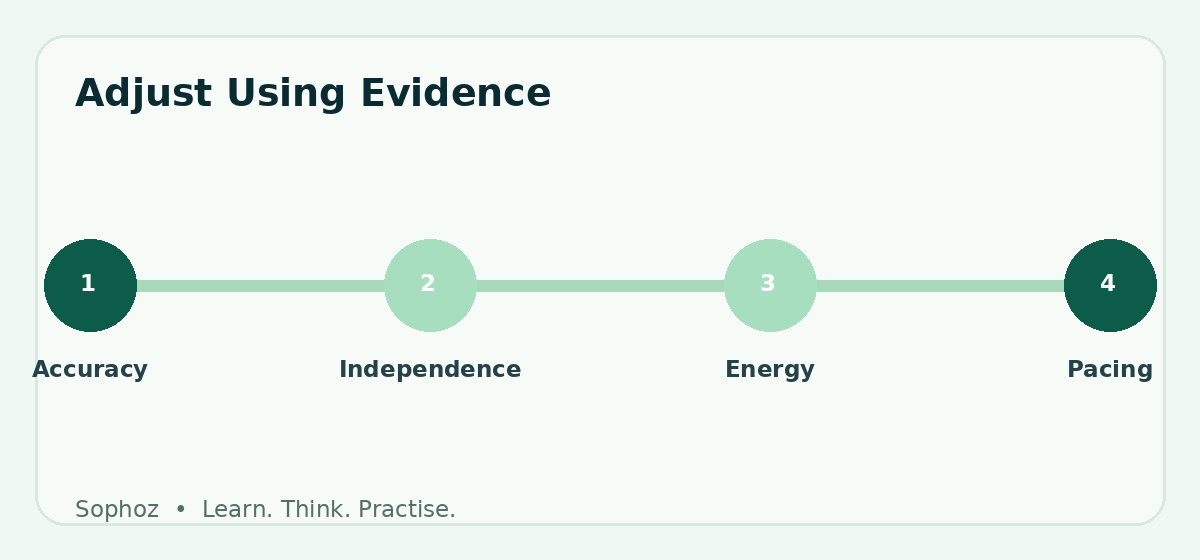
Every two weeks, ask whether accuracy is improving, repeated errors are decreasing, the learner needs fewer hints and pacing is becoming more sensible. If yes, the workload may already be sufficient.
If not, diagnose why before adding hours. More time spent on the wrong activity is still the wrong activity.
A practical way to use this guidance at home
Choose one small change rather than rebuilding the entire routine in a day. For example, introduce a five-minute retrieval warm-up, begin an error log, or replace one chapter-labelled worksheet with a mixed set. Use the change consistently for two weeks and observe what happens.
Parents should look for behavioural evidence as well as scores. Does the learner begin work with less prompting? Do they explain ideas more clearly? Are the same mistakes recurring less often? Can they identify what they find difficult? These indicators help distinguish productive practice from mere activity.
Keep the environment simple. A clear desk, the required materials, a visible timer when timing is appropriate and a defined end point can reduce negotiation. Finish while the learner still has some energy rather than extending every session until attention disappears.
Questions parents can ask after practice
Useful questions keep the focus on learning: Which question required the most thinking? What clue helped you? Where did your first approach fail? Which mistake would you recognise faster next time? Can you explain one solution without looking at your notes?
Avoid turning reflection into interrogation. One or two questions are enough. The aim is to help the child notice their own thinking so that strategies gradually become self-directed.
Over time, invite the learner to choose part of the next session. They might select a weak topic to revisit or a problem they want to retry. Small choices can increase ownership without removing structure.
What success should mean
A competition naturally produces scores and ranks, but preparation can be judged more broadly. A successful learner becomes more accurate, more strategic and more willing to engage with unfamiliar material. They recover from errors faster and need fewer external prompts.
Those capabilities are valuable even when a particular paper is unusually difficult. They also reduce the temptation to treat one result as a permanent label.
Use the exam as a checkpoint. After it, discuss what worked, what the learner would change and which kinds of problems they would still enjoy exploring. That turns a one-day event into useful information for future learning.
A final note for families
Preparation works best when it remains proportionate to the child's age and wider life. The purpose of structured practice is to make thinking clearer, not to fill every free hour. Keep expectations explicit, feedback specific and the routine predictable.
When a learner struggles, diagnose before increasing pressure. When a learner succeeds, ask what strategy contributed. In both cases, direct attention toward processes that can be repeated. That is how an exam-specific routine can contribute to a more general ability to learn independently.
Revisit the plan regularly. What was appropriate four weeks ago may no longer be the best use of time today. Strong learning plans are responsive: they preserve what is working, remove what is not and keep the next challenge within reach.
Sources and further reading
- SOF IMO Class 6 syllabus and pattern
- SOF IMO 2026–27 overview
- SOF Class 6 IMO preparation guide
- SOF Class 6 Science syllabus
- Education Endowment Foundation: cognitive science in practice
Exam details can change. Always verify the current syllabus, dates and pattern with the official organiser.